A report the parliament asked for
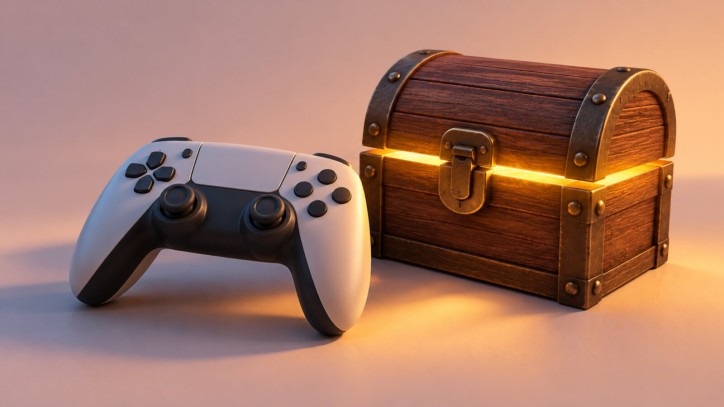
A loot box is a paid mystery pack in a video game: the player pays real money, directly or through a game currency, without knowing what the pack contains. Norway's parliament asked the government to regulate gambling-like elements of this kind in games.[1]
The Ministry of Culture and Equality asked Norway's gambling regulator, the Norwegian Gaming and Foundation Authority (Lotteri- og stiftelsestilsynet), to work out how. The regulator delivered its report on 1 October, written together with the Norwegian Media Authority, the Norwegian Film Institute and the Consumer Authority. On 12 October the ministry sent it out for public consultation.[2][3]
"Unfortunately, we see that some mechanisms in video games are dangerously similar to gambling," said Lubna Jaffery, the culture minister. That is why, she said, the Labour government will regulate loot boxes better. Lene Vågslid, the minister for children and families, said such mechanisms have no place in video games for children.[1]
Where the current law draws the line
Under the current Gaming Act, a game counts as gambling when a player pays a stake for a chance of a prize with economic value. The report explains that an item that can only be used inside the game usually does not count as such a prize, even if it matters for progress or status. The report also reads the law's preparatory works. On that reading, a publisher that stops players selling items outside the game, and enforces the ban, will probably keep its loot boxes outside the law.[3]
Three ways to change it
The report sets out three options:[3]
- A special rule. The general definition of gambling stays, and a new paragraph covers gambling-like elements in or linked to games. There, a prize would not need economic value.
- A general widening. The requirement that a prize must have economic value is removed from the definition of gambling for all games, technologies and platforms.
- A clarification. The requirement stays, but the law says that prizes in games can have economic value even if they cannot be traded outside the game. The report calls this the most limited option.
The regulator, and the three authorities that worked with it, think the first or the second option should be the basis. The proposal would make it illegal to offer or market such mechanisms without a permit. The regulator could then use its enforcement tools against them, such as blocking websites (DNS blocking). Under all three options, regulations would set what counts as a stake and a prize, and which games and activities stay outside the law.[2][3]
How many young people buy them
The report cites two surveys. In a 2025 youth survey for the regulator, 27.7% of 12- to 17-year-olds had bought loot boxes in the past year. In the Norwegian Media Authority's survey of 9- to 18-year-olds in 2026, 23% had bought loot boxes or other surprise packs.[3]
Other countries have taken different routes. The report notes that Belgium in effect bans paid loot boxes through its gambling rules. In the Netherlands, enforcement stopped after a court found that card packs in a FIFA football game were not gambling because the cards could not be turned into money.[3] In Sweden, a government inquiry due in February 2028 is looking at loot boxes among other things.
Comments can be sent until 12 January 2027. The consultation page does not say which option the ministry prefers.[2]
Sources
- Government of Norway — Vurderer strengere regulering av lootbokser i dataspill (12 October 2026, Norwegian). The definition of a loot box, the parliament's request, the proposal for a permit and blocking, and the two ministers' statements.
- Ministry of Culture and Equality (Norway) — Høring av Lotteri- og stiftelsestilsynets utredning om regulering av pengespill-lignende elementer i dataspill (consultation, 12 October 2026, Norwegian). The report's delivery on 1 October, the authorities that wrote it, the permit requirement and DNS blocking, the role of regulations, and the deadline of 12 January 2027.
- Lotteri- og stiftelsestilsynet (Norway) — Utredning om regulering av pengespill-lignende elementer i dataspill (report, 1 October 2026, PDF, Norwegian). The current law on stakes and prizes, the three options and the recommendation, the two surveys, and the examples from Belgium and the Netherlands.