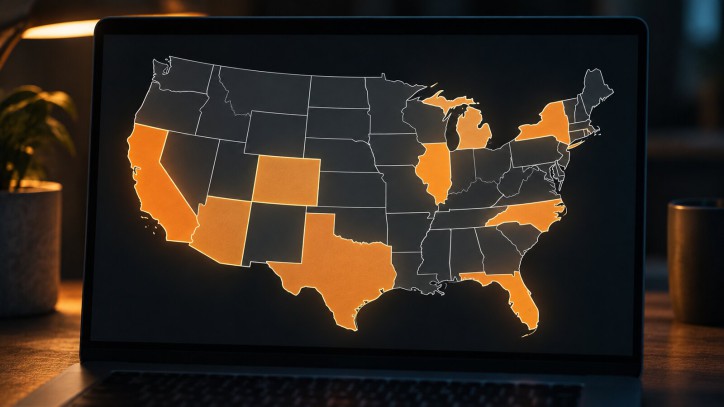
Thirty days to stop or explain
The 5 November document is the CFTC's reading of Regulation 38.151(b), one of its own rules.[1] That rule says the exchanges must give traders "impartial access", on terms that are "impartial, transparent, and applied in a non-discriminatory manner".[2]
The CFTC calls these exchanges designated contract markets. They work under its oversight and may let in ordinary customers.[3] Exchanges for event contracts are often called prediction markets.[4]
Within 30 days, the press release says, the exchanges "must cease" limits based on where in the country a trader is, if those limits break the rule. The alternative is to explain to the CFTC's Division of Market Oversight why they cannot comply.[1] That division oversees the markets the CFTC regulates.[5]
In the same 30 days, the exchanges should make sure that intermediaries, the firms that stand between customers and an exchange, are not getting in the way of the rule, or explain why not. The CFTC will consider "the facts and circumstances" of each case when weighing any action.[1]
Bans set by states
Nevada's gaming regulator lists state court orders from March to May 2026 that bar Coinbase, Kalshi and Polymarket from offering "prohibited event contracts" in Nevada. Crypto.com and Robinhood, it says, agreed in late 2025 to limit their event contracts there while they appeal.[6]
In September the attorney general of Missouri told six companies, Kalshi among them, to stop offering sports event contracts in the state until they hold a state licence. In the office's view, offering such contracts is "unlicensed sports wagering".[7]
A home team and a state election
Michael S. Selig, the CFTC's chairman, said markets of this kind must work on a "uniform basis at a national scale". In his words, limits by location are "inconsistent with" the aims of the Commodity Exchange Act, the law behind the rule.[1]
The guidance gives reasons. Someone might open a position in a state where trading is allowed, then travel to one where it is not. They could then be unable to manage it or meet a margin call, a demand for more money to cover losses. The position might be closed out by force.[2]
It also points to sports contracts. Some draw strong local interest, such as "whether a home team advances to its playoffs", so shutting out that region could thin out trading. Election markets "may be particularly sensitive". People in the state or town holding the vote may bring much of the trading and the best information. The media may use the prices as one guide to the likely result.[2]
Guidance, now in the Federal Register
The six-page document calls itself "final interpretive guidance", issued to tell the public the Commission's views. In the CFTC's own copy two dates are blank: it was "Issued in Washington, DC, on November __, 2026", and it takes effect on its date of publication.[2] The Federal Register, the government's daily journal of rules and notices, published it on 10 November. That copy says the Commission issued it on 5 November and gives 10 November as the date it took effect.[11]
The 30-day deadline is in the press release only. The guidance sets no time limit. It says the Commission "expects" exchanges to review their access terms, rules and links with intermediaries.[1][2] Neither document names an exchange, mentions state gambling laws or court orders, or says what a firm would face if it kept its limits.[1][2]
Three steps in four weeks
On 9 October the CFTC proposed counting event contracts as swaps, a kind of derivative, naming sports, politics, culture and weather.[8] On 26 October the CFTC and the US government took the state of Utah to federal court.[9] The chart below draws these two steps and the 5 November guidance to scale.
In announcing the suit against Utah, the CFTC said it had also started proceedings against nine other states.[10]
Sources
- Commodity Futures Trading Commission (United States) — CFTC Issues Impartial Access Requirements Interpretation (release 9323-26, 5 November 2026, English). The interpretation, the chairman's words, the two 30-day requests and the case-by-case approach.
- Commodity Futures Trading Commission (United States) — DCM Impartial Access Requirements (interpretation, PDF, dated "November __, 2026", English). The rule's wording, the reasons and examples, the blank dates, and what the Commission expects.
- Commodity Futures Trading Commission (United States) — Designated Contract Markets (DCMs) (English). What these exchanges are.
- Wikipedia — Prediction market (English). What a prediction market is.
- Commodity Futures Trading Commission (United States) — Division of Market Oversight (DMO) (English). What the division oversees.
- Nevada Gaming Control Board (United States) — Timeline of Nevada Gaming Control Board (NGCB) Actions Against Prediction Markets (last updated 30 June 2026, English). The court orders and the agreed limits. Saved copy (screenshot, 10 November 2026).
- Attorney General of Missouri (United States) — Missouri Attorney General Hanaway Orders Unlicensed Prediction Markets To Cease And Desist Unlawful Sports Wagering (18 September 2026, English). The letters and the office's view. Saved copy (screenshot, 10 November 2026).
- Commodity Futures Trading Commission (United States) — CFTC Seeks Public Comment on Notice of Proposed Rulemaking Concerning the Inclusion of Certain Event Contracts in the Definition of Swap (release 9310-26, 9 October 2026, English). The proposal of 9 October.
- United States District Court for the District of Utah — United States of America and Commodity Futures Trading Commission v. State of Utah and Derek Brown, Complaint for Declaratory and Injunctive Relief (case 2:26-cv-01055, filed 26 October 2026, PDF via the CFTC, English). The parties, court and filing date.
- Commodity Futures Trading Commission (United States) — CFTC Sues to Block State Enforcement in Utah Amid Ongoing Efforts to Preserve Jurisdiction (release 9315-26, 27 October 2026, English). The proceedings against nine other states.
- Office of the Federal Register (United States) — DCM Impartial Access Requirements (91 FR 72407, published 10 November 2026, English). The publication date, the issue date and the date the guidance took effect. Saved copy (screenshot, 10 November 2026).