
What the adverts did
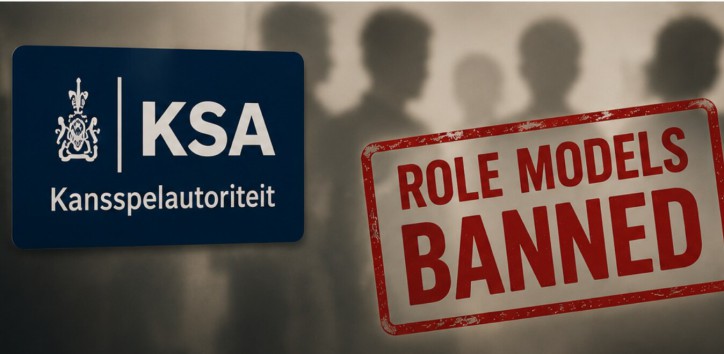
On 6 August the Kansspelautoriteit said it had challenged Betcity and TOTO Winkel over breaches of the ban on role models in gambling advertising. Both were found during heightened supervision the regulator ran around the football World Cup.[1]
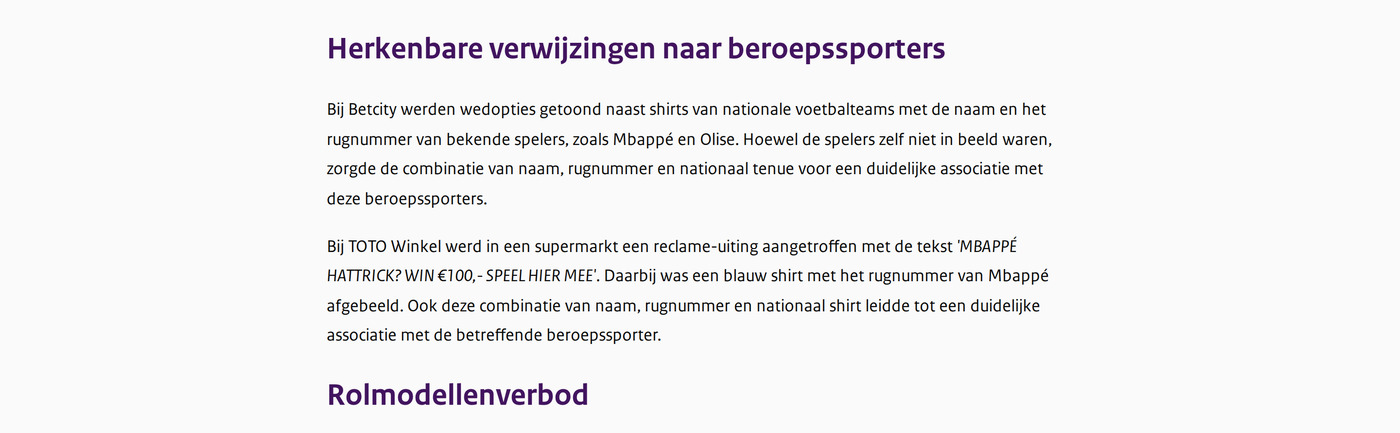
Betcity displayed betting options next to national-team shirts carrying the names and numbers of well-known players, among them Mbappé and Olise. The players themselves did not appear.[1]
TOTO Winkel's advert was found in a supermarket. It read "MBAPPÉ HATTRICK? WIN €100,- SPEEL HIER MEE", beside a blue shirt bearing Mbappé's number.[1]
After the Ksa raised it, both sets of adverts came down immediately, and TOTO Winkel withdrew others it had planned.[1]
The rule being applied
Dutch licence holders offering online gambling, and those licensed for land-based sports betting, may not use role models in advertising. The category covers current and former professional athletes, influencers and other well-known people. The rule exists to protect young people and players at risk.[1]
The part doing the work here is an extension of it. The ban also catches advertising that produces a clear association with a role model through recognisable features, whether or not the person is shown.[1] A name, a number and a national kit, put together, made the association clear enough.
The same test, in another country, weeks later
Romania's regulator fined an operator 20,000 lei in August over a campaign featuring an actor presented as a doctor — white coat, stethoscope, consulting room — telling viewers the site was easy to use between appointments. We covered that decision when it landed.
The two cases share a method. Neither turns on whether a rule was literally broken by a literal depiction. Both ask what the whole advert makes the viewer think of, and both answer that a borrowed authority — a footballer's, a doctor's — is doing the persuading.
The Dutch and Romanian rules are not the same rule, and nothing here says one regulator followed the other. What they have in common is the test: effect on the audience rather than the presence of a prohibited element.
What the Ksa did not do
No fine is announced. The word the regulator uses is that it addressed the two companies, and the outcome recorded is that the advertising was withdrawn.[1] That is an enforcement action of the lightest kind, and reading it as a penalty would overstate it.
Nor is anything said about the agencies that produced the adverts, or about whether the World Cup supervision found more that has not been published. The Ksa says only that it supervises compliance and acts when a licensee breaches the ban.[1]
Why an advertising rule is worth a player's attention
An advert cannot tell you whether a site is licensed where you live, and a compliant advert tells you no more than a non-compliant one. Our gambling regulation map covers the check that does answer it.
What a case like this does show is which techniques a regulator has decided work on people. The Ksa's view, stated in the rule itself, is that association with a famous face makes gambling more persuasive to the young and to players already at risk. That is a claim about how advertising functions, and it is the reason the shirt number was enough.
Sources
- Kansspelautoriteit — Ksa spreekt Betcity en TOTO Winkel aan op overtreding rolmodellenverbod (6 August 2026, Dutch). The two companies, the World Cup supervision, the description of both adverts including the TOTO Winkel wording and the players named, the immediate withdrawal and the planned adverts pulled, the scope of the role-model ban, and its extension to advertising that creates a clear association through recognisable features.



