
The health service, now a listed public service
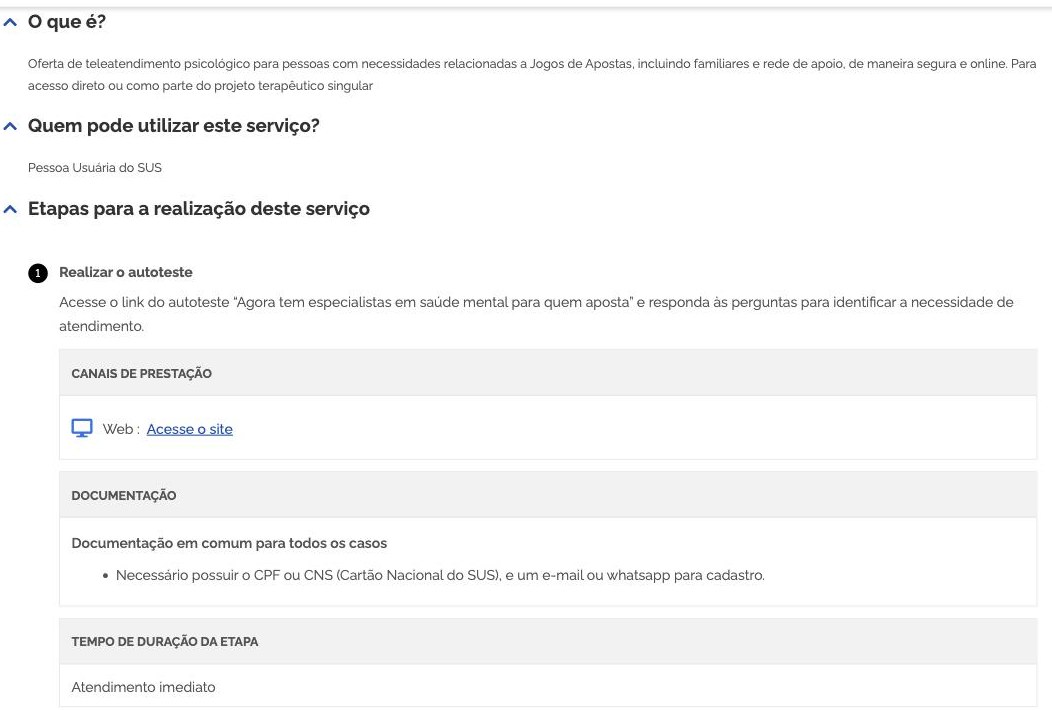
On 25 August Brazil's federal services catalogue listed the health ministry's telehealth service for betting problems.[1] The listing is what is new. The service was already running, and the ministry was already advertising it in July.[2]
What it offers is psychological telecare, online and confidential, for people with problems related to betting — and for their families and support network.[1] It is open to users of the public health system. There is no charge.
Getting in takes three steps. You answer a self-test. You register with a tax number or health-card number plus an email address or WhatsApp. Then you book the appointment, and the booking is immediate.[1] Sessions run Monday to Friday from 8am to 8pm, and Saturdays from 8am to 2pm.[1]
There is an in-person route too. It starts at a basic health unit, and moves to a psychosocial care centre when specialist help is needed.[2]
The switch that turns off every licensed site
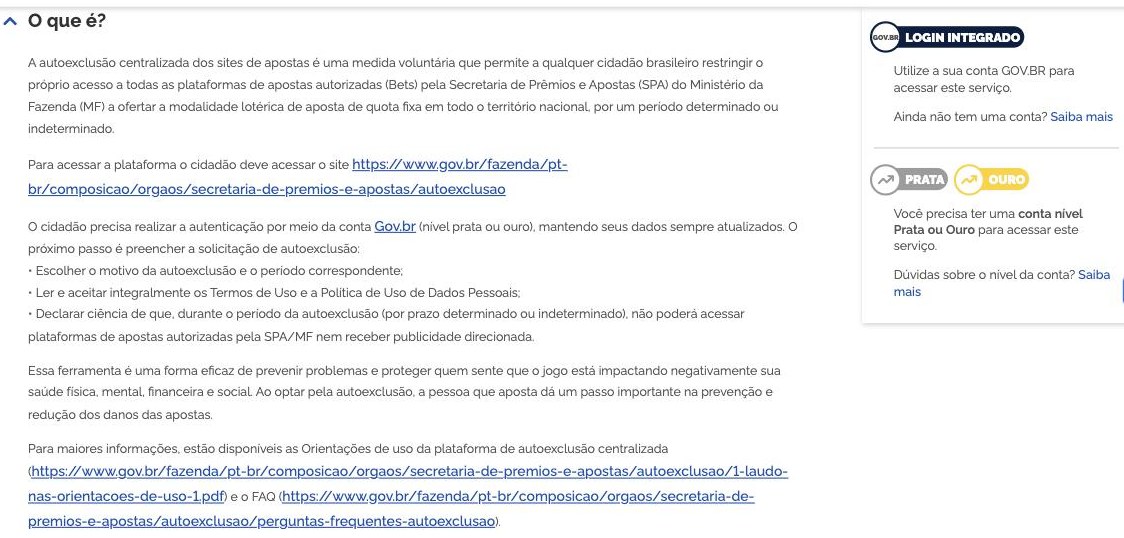
The second tool is the harder one, and it belongs to the finance ministry rather than health. Central self-exclusion lets any Brazilian citizen block their own access to every betting platform the state has authorised — not one operator at a time.[3]
You sign in with a government account at silver or gold level. You pick a reason and a period, which can be fixed or open-ended. You accept the terms, and you confirm you understand what follows: while it lasts, you cannot use an authorised betting platform, and those companies cannot send you targeted advertising.[3]
Doing it operator by operator is the version most players will have met. Here it is one form.
Why the state built both
In July the health ministry put a national campaign on television, radio and social media, timed to the return of the football season and a run of big sporting events.[2] The campaign explains what problem betting looks like and where to get help.
The ministry's framing is medical, not moral. Gambling disorder is classified as an addictive behaviour disorder in both the international disease classification and the psychiatric manual, and the ministry cites a World Health Organization estimate that it affects about 1.2% of the world's adult population.[2]
The signs it tells people to watch for are ordinary ones. Betting longer or spending more than planned. Thinking about it often. Changes in sleep, mood, routine or relationships.[2]
What it means for a player in Brazil
Both tools are free, both start with a government login, and neither is run by a bookmaker.
Self-exclusion covers only the platforms the state has authorised. A site outside that list will not be blocked, and it has no obligation to stop advertising to you. So knowing which is which comes first, and our gambling regulation map names the regulator for each country and the register it publishes.
The health route is open to families as well. If the person betting is not ready to ask, somebody around them can.[1]
Sources
- gov.br — Ofertar Estratégia Nacional de Telessaúde em Saúde Mental para Pessoas com Necessidades Relacionadas a Jogos de Apostas (federal services catalogue, last modified 25 August 2026). What the service is, who may use it, the three steps, the documents needed and the hours.
- Ministério da Saúde — Campanha do Ministério da Saúde orienta sobre riscos das apostas online e atendimento em saúde mental no SUS (26 July 2026). The campaign, the disease classification and the WHO estimate, the warning signs, and the in-person route through basic health units and psychosocial care centres.
- gov.br — Solicitar a autoexclusão centralizada — Apostas (federal services catalogue, last modified 30 July 2026). Central self-exclusion: what it covers, the account level required, choosing a reason and a period, and the advertising ban that comes with it.



